
Choosing a dissertation topic is often harder than writing the first page. You may have several ideas. You may also worry that your supervisor will reject them. A good topic does not need to solve a global problem. It needs to ask a worthwhile question that you can answer with credible evidence.
In the UK, universities set their own rules for dissertation titles, proposals, methods and ethics. No guide can promise first-attempt approval. However, careful preparation can reduce avoidable revisions. This article shows how to move from a broad interest to a focused, realistic proposal.
You will learn how to identify a research gap, assess data access, match a method to a question and present your idea to a supervisor. Examples cover business, education, social science and technology. Use them as starting points, not ready-made titles to submit unchanged.
What makes a good dissertation topic?
A strong topic sits where academic value meets practical feasibility. It relates to your degree. It has a defined scope. It connects to published research. Most importantly, it can be investigated within your time, resources and ethical limits.
Interest matters too. You will read and revise around the same issue for weeks or months. A topic that keeps you curious can make that work more manageable. Interest alone is not enough, though. A fascinating subject may still be unsuitable if evidence is inaccessible.
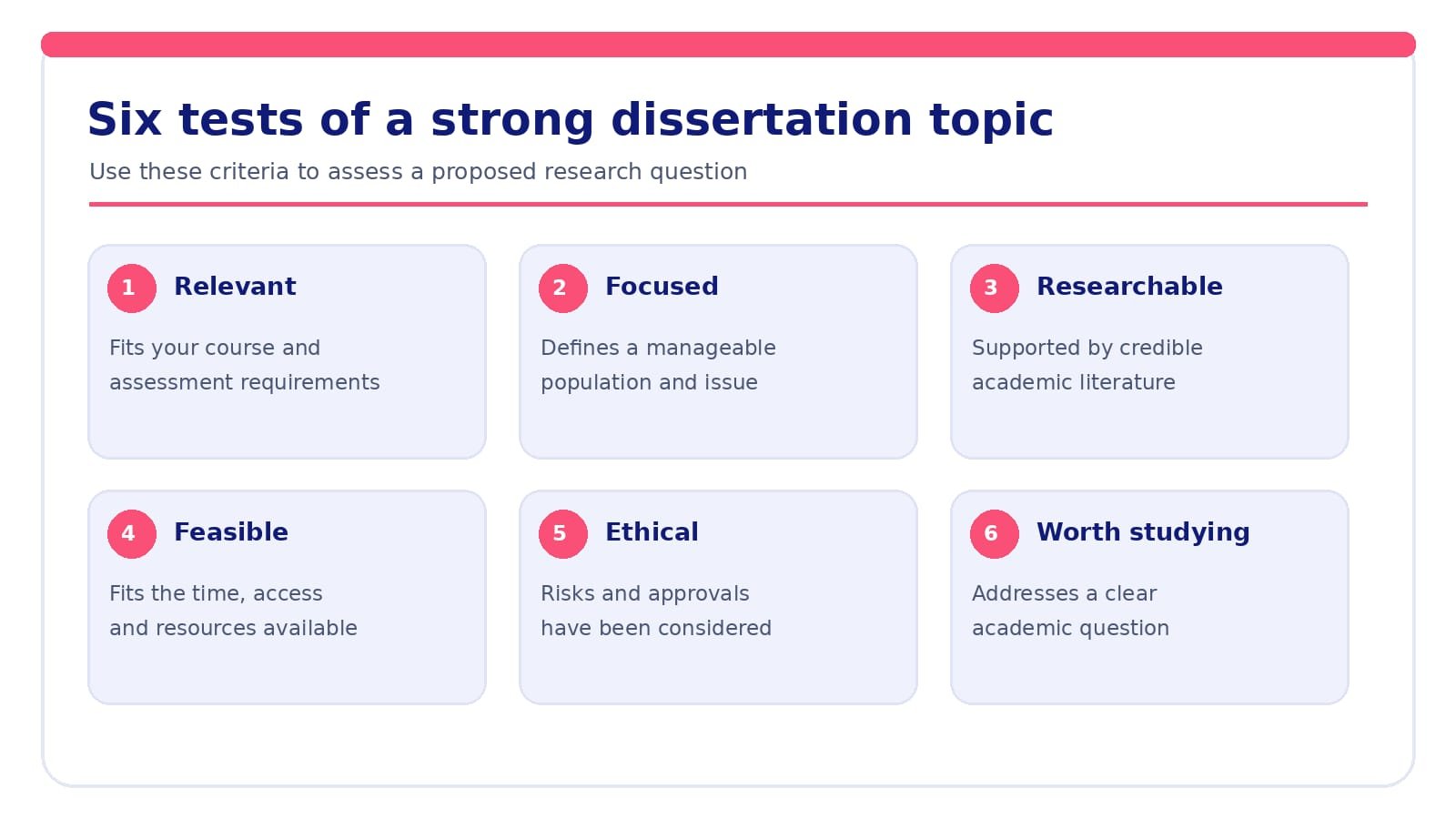
Figure 1. Six criteria for evaluating a dissertation topic.
| Criterion | Ask yourself | Warning sign |
| Relevance | Does it fit my course outcomes? | Interesting but unrelated to the programme |
| Focus | Can I describe the issue in one sentence? | A title covering several unrelated questions |
| Evidence | Can I find credible academic sources? | Only blogs or opinion pieces are available |
| Feasibility | Can I finish with my resources? | Access depends on unlikely permissions |
| Ethics | Can I manage participant risks? | Sensitive data without an approval plan |
| Contribution | What useful question will I answer? | No clear reason for the study |
Step 1: Read your dissertation handbook before brainstorming
Start with the assessment brief. This may sound obvious, but it prevents major problems. Your department may specify a word count, research design, topic submission form or ethics process. Some programmes accept literature-based projects. Others expect original data collection.
Write down the topic approval deadline, proposal length, supervision arrangements and marking criteria. Check whether you can use existing datasets, interview participants or analyse documents. Look for restrictions on recruiting students, patients, children or employees.
If the handbook is unclear, ask the module leader. Do not rely on advice from students on a different course. University procedures can vary even between departments in the same institution.
Step 2: Build a shortlist from your interests
Look back at modules, assignments and lectures that held your attention. What question did you wish the lecturer had explored further? Which debate produced conflicting evidence? What issue might connect to your future career? Write down five broad interests before narrowing them.
For an HRM student, possible starting areas include hybrid work, employee wellbeing and recruitment fairness. For an education student, they might include feedback, attendance and digital learning. For criminology, they might include youth diversion, neighbourhood safety or public perceptions of policing.
Do not choose the first fashionable subject you see. A popular theme such as artificial intelligence may produce a crowded and vague proposal. The value lies in the precise question, population and context you select.
Step 3: Search the literature and keep a reading log
Search your university library and Google Scholar first. Subject databases may include Scopus, Web of Science, ERIC, PsycINFO or PubMed, depending on your discipline and access. Combine a core concept with a population, setting or outcome.
For example, try “hybrid work” AND “work-life balance” AND “SMEs”. Change one term at a time. Search both British and American spellings when relevant. Read abstracts to filter results. Then review full texts of the strongest sources.
Keep a simple reading log with the author, year, setting, method, key finding and limitation. Record the DOI or stable URL. This saves time when writing your literature review. It also helps you avoid unsupported claims about what research has or has not covered.
| Source | Question to record | Why it matters |
| Recent review | What is already established? | Shows major debates and definitions |
| Empirical article | Who was studied and how? | Reveals design choices and limitations |
| Theory paper | Which concept explains the issue? | Strengthens the academic framework |
| Policy or official report | What is the UK context? | Adds context but does not replace scholarship |
Step 4: Identify a research gap without inventing one
A research gap is a justified reason for further investigation. It is not simply a claim that “nobody has studied this”. You might find conflicting findings, a neglected population, a new policy context or a limitation in earlier methods.
Suppose published research discusses hybrid working mainly in large companies. A study of selected UK small and medium-sized enterprises might be useful. First, verify that this gap actually exists. Search alternative keywords and review recent papers. If relevant studies already exist, explain what your work will compare, extend or question.
At undergraduate level, a modest and clearly argued contribution can be enough. At Master’s level, assess the depth expected by your programme. The purpose is not to promise a major discovery. It is to frame a credible question.
Step 5: Narrow your topic using five boundaries
A broad topic often fails because it has no manageable limits. “Social media and students” could involve any platform, age group, country or outcome. A focused question identifies what will be studied and what will be left out.
- Concept: What issue will you investigate?
- Population: Whose experiences or data matter?
- Setting: Which institution, industry or country?
- Outcome: What relationship, experience or pattern interests you?
- Scope: What time period or material can you realistically cover?
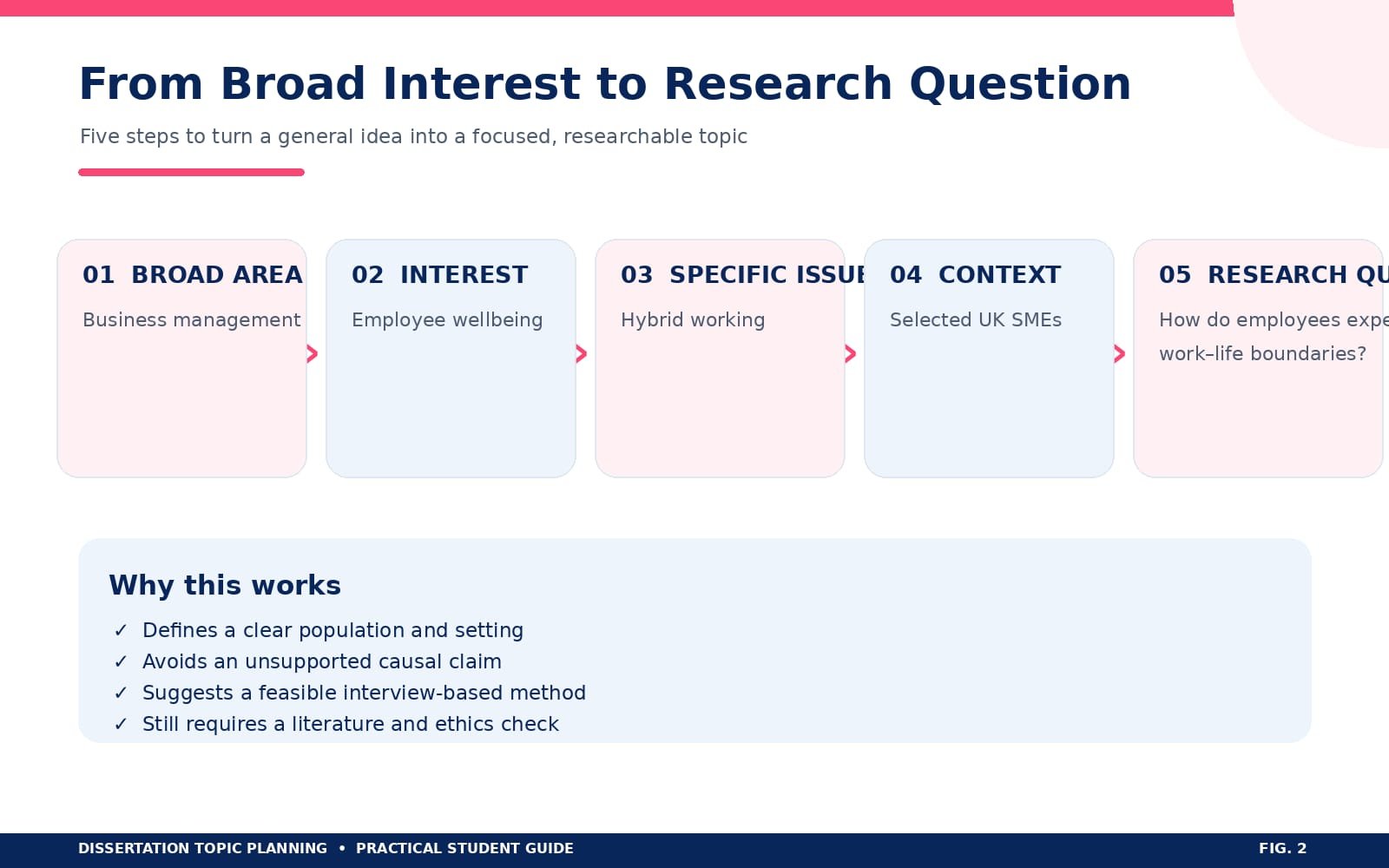
Example: “social media and education” becomes “How do first-year UK undergraduates describe the role of short-form video use in their study routines?” The revised question suggests an interview-based study. It also makes clear whose views are relevant.
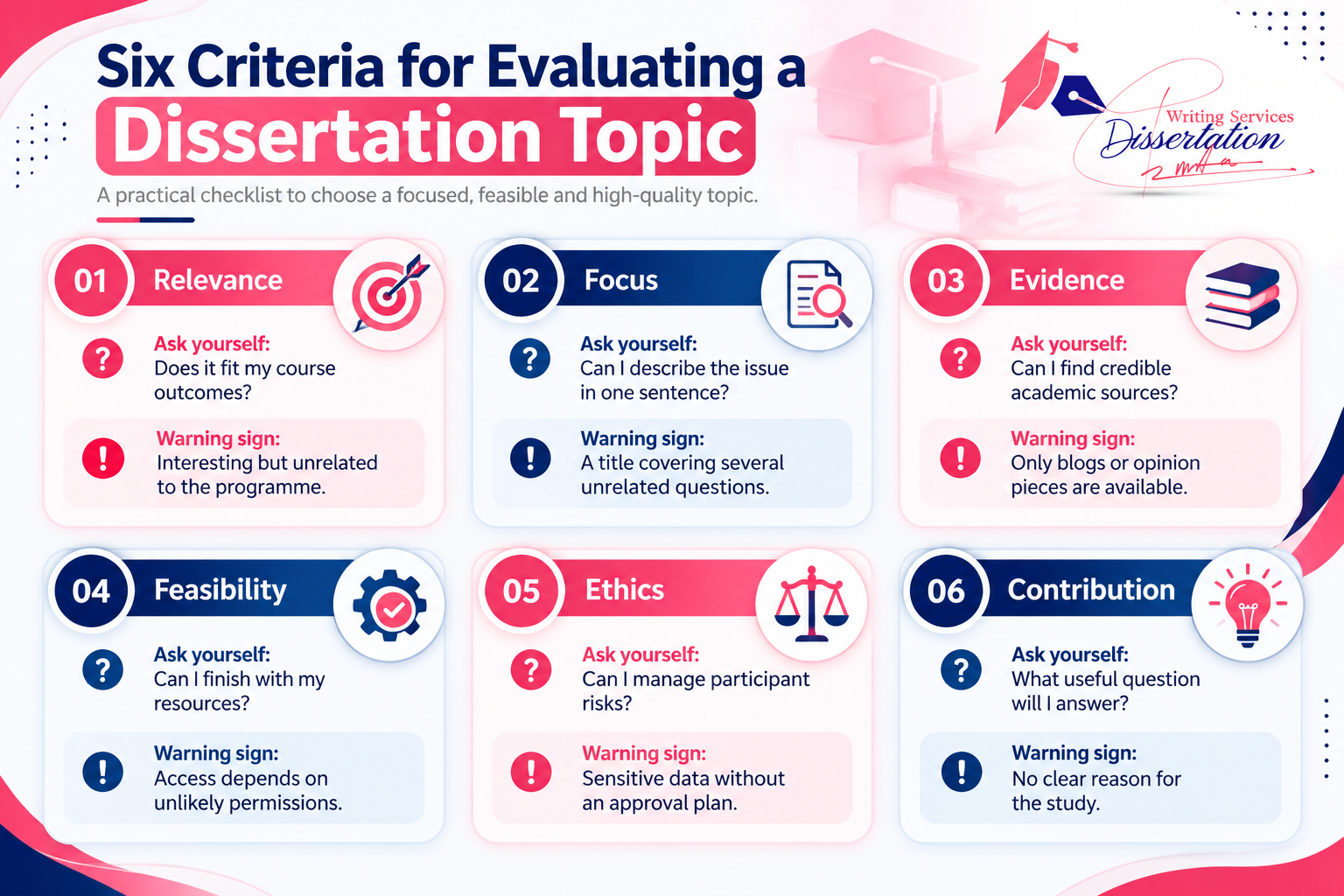
Figure 2. Narrowing a broad topic into a researchable question.
Step 6: Turn the topic into a research question
Your title describes the subject. Your research question directs the investigation. Good questions are specific, answerable and aligned with the evidence you can collect. They do not build a conclusion into the wording.
Compare “Does remote working improve productivity?” with “How do employees in selected UK SMEs describe the benefits and challenges of hybrid working for their concentration?” The second question is better suited to qualitative interviews. A quantitative version might ask whether self-reported concentration differs across categories of hybrid-working frequency.
Avoid causal words such as “impact” if your design cannot support a causal claim. A cross-sectional survey can often identify associations. It usually cannot prove that one factor caused another. Use “relationship”, “perceptions” or “experiences” when these more accurately describe your evidence.
| Broad question | Focused question | Possible method |
| Is AI good for education? | How do UK postgraduate students perceive AI feedback tools during dissertation planning? | Interviews |
| Does flexible work help staff? | Is hybrid-work frequency associated with self-reported work-life balance in a selected workforce? | Survey |
| Why is youth crime rising? | How do recent UK policy documents frame youth diversion programmes? | Document analysis |
| Does social media cause stress? | What relationship exists between reported social media use and perceived stress in a defined student sample? | Survey |
Step 7: Match the method to the question
A good dissertation methodology follows from the question. If you want to understand lived experiences, qualitative interviews may help. If you want to examine measurable patterns, a survey or dataset may be suitable. If you want to evaluate arguments across existing studies, a structured literature review may fit.
Each approach has limitations. Interviews take time to recruit, transcribe and analyse. Surveys need clear questions, adequate sampling and an analysis plan. Literature reviews require transparent inclusion criteria and critical synthesis. Mixed methods can be valuable but often increase the workload.
Ask what data you will need before choosing a method. Then check whether you can obtain those data lawfully and ethically. Do not describe a questionnaire as “easy” simply because it is online. Poor sampling and ambiguous questions can undermine the entire project.
Step 8: Test feasibility, access and ethics
A topic can be academically strong and still be impossible to complete. If you need employees from a particular company, confirm that access is realistic. If you need sensitive information, check university procedures and data protection requirements. If you plan to recruit children, additional safeguards may apply.
Most universities require some form of ethics screening for research involving people. Approval may be needed before recruitment or data collection. Never assume that anonymous surveys are automatically exempt. Follow your own institution’s guidance.
Build a backup plan. Could you use publicly available documents if recruitment fails? Could you narrow the sample? Could you revise the question while keeping the core academic issue? A realistic alternative makes your proposal stronger.
Step 9: Compare your options objectively
When several topics look promising, score each one. Give each criterion a score from one to five. Use the scores to guide discussion, not to replace judgement. A high total cannot overcome a serious ethical barrier or a lack of data.
| Criterion | Hybrid work | AI feedback | Youth diversion |
| Interest | 4 | 5 | 4 |
| Literature access | 5 | 4 | 4 |
| Data access | 3 | 4 | 5 |
| Ethical feasibility | 4 | 4 | 5 |
| Time feasibility | 4 | 4 | 4 |
| Total / 25 | 20 | 21 | 22 |
These numbers are illustrative only. Your scores will depend on your course, skills and access. If the top-scoring idea requires an unfamiliar statistical method, discuss training and support before committing.
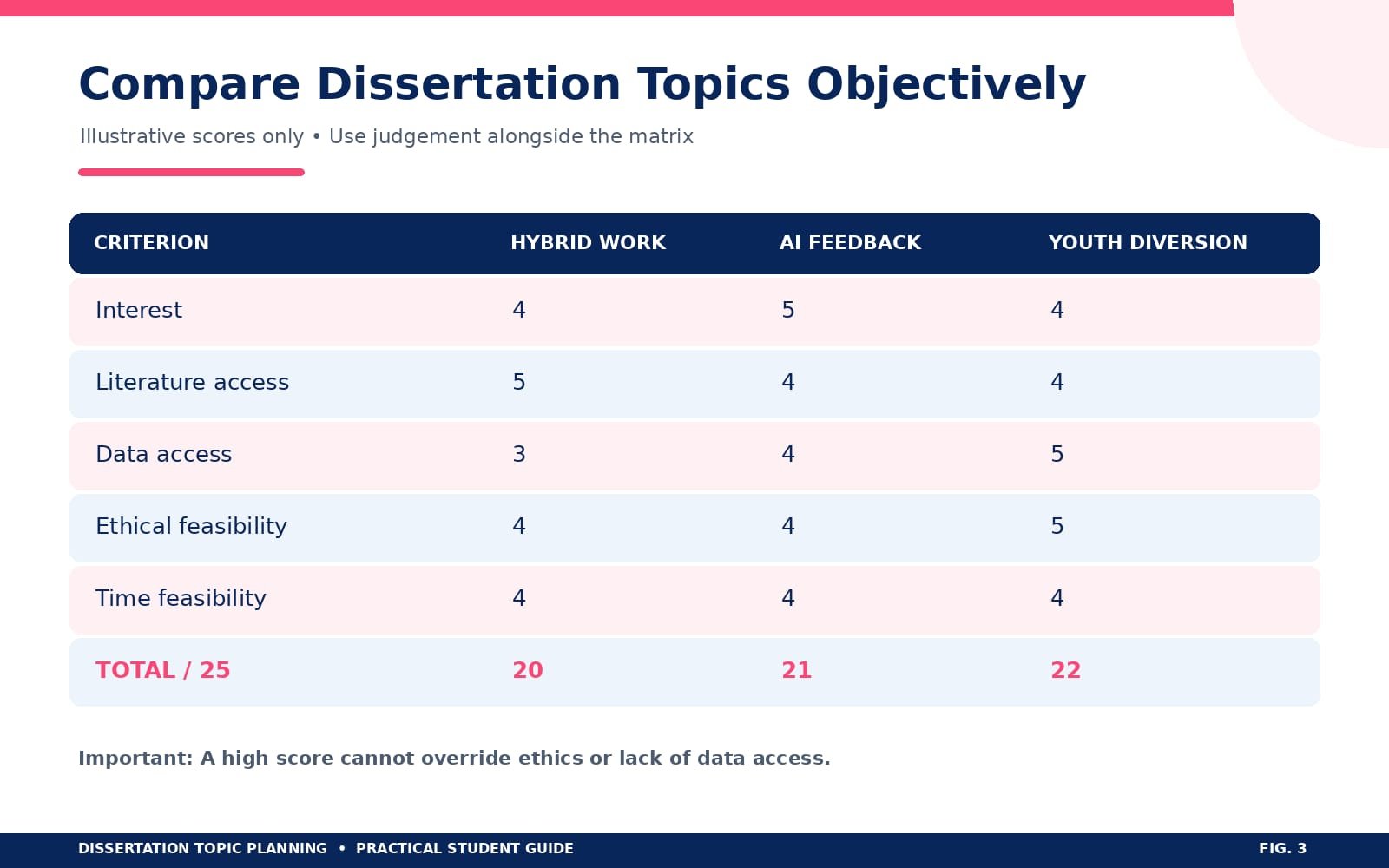
Figure 3. Topic evaluation framework. Example scores are not research results.
Step 10: Prepare a short proposal for your supervisor
A supervisor needs enough information to judge relevance, scope and feasibility. You do not need to have every answer. You do need a coherent plan and evidence that you have read around the issue.
Suggested one-page topic proposal structure
- Working title: one clear sentence describing the focus.
- Background: a short explanation of the academic context.
- Research problem: what is uncertain, contested or worth exploring?
- Aim and question: one main aim and one focused research question.
- Objectives: three or four tasks that help answer the question.
- Method: proposed data source, sampling and analysis.
- Feasibility: access, ethics, limitations and timeline.
- Initial references: a few credible sources you have actually read.
For example, a working title might be “Employee Experiences of Hybrid Working in Selected UK SMEs”. The question could ask how participants perceive work-life boundaries. Interviews may be proposed, subject to recruitment and ethics approval. The proposal should not promise findings before the study begins.
When you meet your supervisor, ask what is too broad, what evidence is missing and whether the proposed method is realistic. Write down the feedback. Then revise the title and question together. A revised question may require a different method.
Common reasons topics are returned for revision
| Problem | Why it matters | Practical fix |
| Scope is too broad | No clear boundaries | Define population, setting and outcome |
| Research gap is asserted | Academic value is unsupported | Cite relevant studies and limitations |
| Data access is uncertain | Study may be impossible | Confirm access or identify secondary data |
| Question and method conflict | Evidence cannot answer the question | Rewrite question or change design |
| Ethics is overlooked | Recruitment may be delayed | Check ethics before data collection |
| Title promises causation | Design may only show association | Use accurate, cautious wording |
A realistic two-week topic selection plan
This schedule is a planning example, not an official university requirement. Adjust it to your deadline and the amount of preliminary reading needed.
| Days | Task | Output |
| 1–2 | Read handbook and marking criteria | Requirements checklist |
| 3–4 | Generate and shortlist ideas | Three possible topics |
| 5–7 | Search and log literature | Annotated reading log |
| 8–9 | Draft focused questions | Question and scope for each topic |
| 10–11 | Assess methods, ethics and access | Feasibility notes |
| 12–13 | Draft one-page proposal | Supervisor-ready outline |
| 14 | Seek feedback and revise | Improved working title |
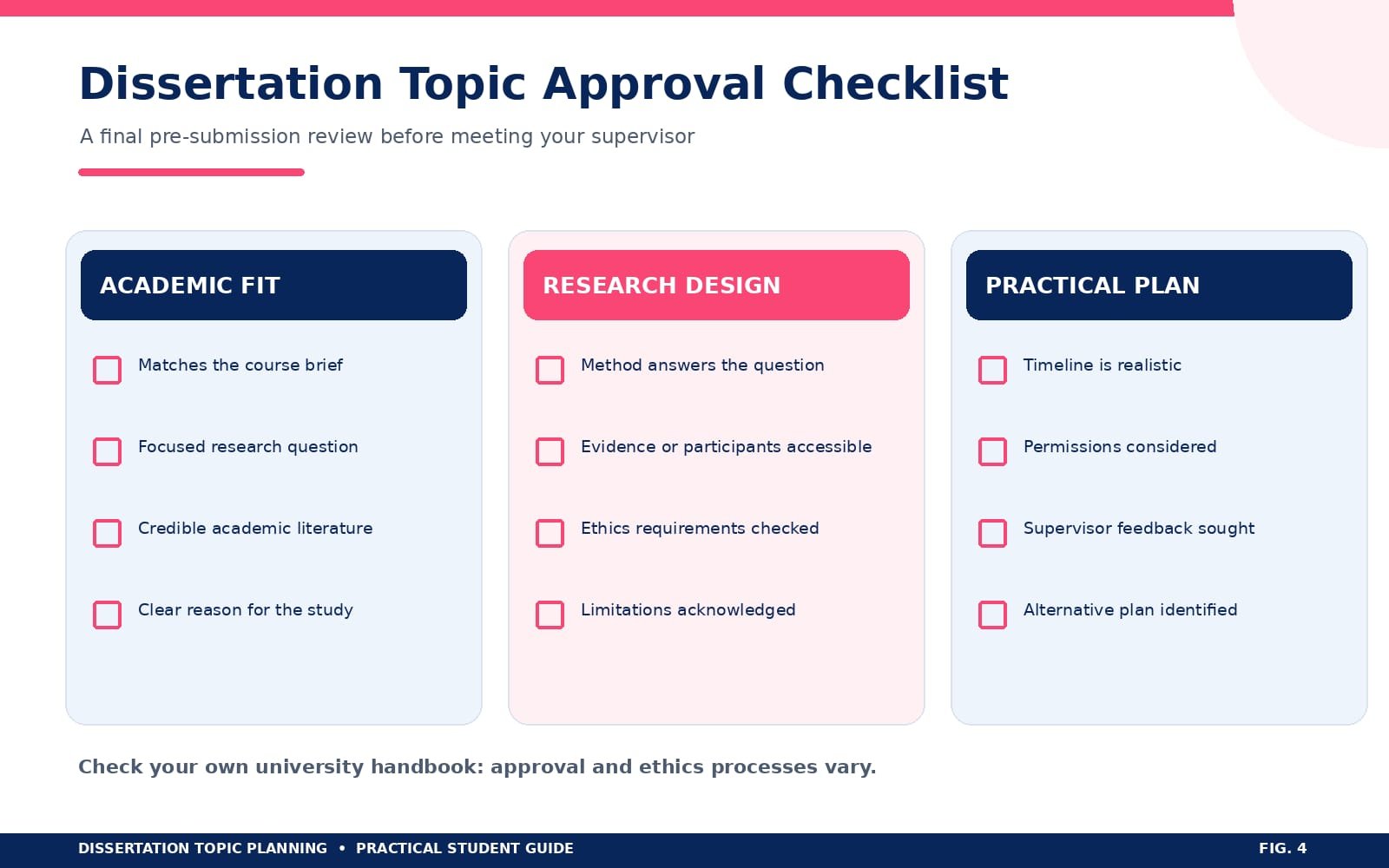
Dissertation topic approval checklist
- The topic fits my degree and module requirements.
- The title and research question have clear boundaries.
- I have read credible sources that establish the academic context.
- I can explain the value of the proposed research without exaggeration.
- My proposed method can answer the question.
- I have a realistic plan for data access and analysis.
- I understand the ethics process and will obtain approval if required.
- My timeline includes room for supervisor feedback and revision
Frequently asked questions
How do I choose a dissertation topic for a Master’s degree?
Start with your course requirements. Select an academic interest, review relevant literature and develop a focused research question. Then assess methods, access and ethics. Master’s projects often require a stronger justification of the research design, but the exact standard depends on the programme.
Can I choose my own dissertation topic in the UK?
Many courses allow students to propose a topic. Some provide set titles or require approval from a topic list. Your handbook and module leader are the authoritative sources.
What is the easiest dissertation topic?
The most manageable topic is one with a clear question, accessible evidence and methods you can apply well. “Easy” depends on your experience and available resources.
How many dissertation topic ideas should I prepare?
Three options are often enough for a useful comparison. Prepare a short rationale and feasibility note for each rather than generating a long list of vague titles.
Does my dissertation need an entirely original topic?
Not always. Expectations vary by degree and discipline. A focused application, comparison or critical evaluation of existing research can be academically useful when justified well.
Can I change my dissertation topic after approval?
Sometimes. Ask your supervisor and follow the formal process. A substantial change may require a revised proposal or new ethics review.
Can AI help me find dissertation topics?
AI can support brainstorming. It cannot verify a research gap or replace academic reading. Check all references and follow your university’s AI policy.
What if my supervisor rejects my first topic?
Ask which issue caused concern: scope, relevance, methods, evidence or feasibility. Revise that part first. A request for changes is a normal part of research planning.
How long should a dissertation topic proposal be?
There is no universal length. Follow your university’s template. A short initial outline may be enough for discussion, while a formal proposal may need several detailed sections.
Should I collect survey responses before topic approval?
No. Confirm your department’s ethics and approval requirements before recruitment or data collection. Starting early can create ethical and procedural problems.
A practical 30-minute dissertation topic stress test
Before you send a topic to your supervisor, give it a quick stress test. Set a timer for 30 minutes. Spend five minutes checking the course handbook. Use ten minutes to locate relevant peer-reviewed literature. Spend five minutes drafting your research question. Use the remaining ten minutes to assess access, ethics and scope.
If you cannot explain the research question in one sentence, the idea may still be too broad. If you cannot find any credible studies, widen the search terms before abandoning it. If access depends on a company agreeing to interviews, write down a backup method. The purpose is to uncover problems while they are still cheap to fix.
Example: A student proposes “The effect of leadership on business success”. This is difficult to measure. After the stress test, they revise it to “How do retail employees in selected UK SMEs describe the role of line-manager feedback in their motivation?” The revised question defines a population and an experience. It also points towards interviews rather than an unsupported claim of causation.
How to present your idea at the first supervisor meeting
Bring a one-page briefing rather than a polished dissertation chapter. At the top, write your working title and one research question. Add a short paragraph explaining why the issue matters. Then name three to five academic sources that show the debate. Finish with your likely method, data source and two risks.
You can say: “I want to examine postgraduate students’ experiences of recorded lectures. I have found research on online learning and accessibility. I would like to explore the experiences of part-time students in one programme. I am considering interviews, subject to recruitment and ethics approval. Is this scope realistic?”
Ask targeted questions. Is the question sufficiently analytical? Does the sample make sense? Would a literature-based approach be safer? Which university approval forms are required? Write down the answers immediately. Send a short summary afterwards so you and your supervisor share the same understanding.
Research gaps: four claims to avoid
Claim 1: “No research exists.” This is rarely safe after a quick Google Scholar search. Say which databases, keywords and dates you checked. Explain what appears underexamined rather than declaring a universal absence.
Claim 2: “The topic is important because it is trending.” Popularity is not an academic justification. Connect the issue to a theory, an unresolved finding, a practical problem or a policy debate.
Claim 3: “My survey will prove the cause.” A cross-sectional survey often shows associations, not causation. Match the language of your question to what the design can support.
Claim 4: “The sample represents all UK students.” A small convenience sample from one university rarely supports that conclusion. Define your population and be open about limitations.
Three worked examples: from idea to research question
Example A — HRM. Broad idea: employee wellbeing. Refined issue: flexible work and work-life boundaries in small organisations. Working question: “How do employees in selected UK SMEs experience work-life boundaries when working in hybrid roles?” Potential evidence: semi-structured interviews. Key risk: recruiting participants through employers.
Example B — Education. Broad idea: artificial intelligence in universities. Refined issue: how students judge feedback generated by AI tools. Working question: “How do final-year undergraduates perceive the usefulness and limitations of AI-assisted feedback?” Potential evidence: interviews or a carefully designed questionnaire. Key risk: defining the tool and avoiding leading questions.
Example C — Criminology. Broad idea: youth crime. Refined issue: published evaluations of diversion programmes in England. Working question: “What outcomes and implementation barriers are reported in published evaluations of youth diversion initiatives in England?” Potential evidence: a structured review of documents. Key risk: uneven evaluation quality and different outcome measures.
These are illustrative starting points. They are not verified research gaps. Each requires a literature search and approval under the relevant course rules.
What to Do If Your Supervisor Requests Changes
If your dissertation supervisor requests changes to your topic or proposal, do not treat the feedback as a final rejection. Instead, follow these practical steps to improve your work and increase your chances of approval.
- Understand the feedback: Ask your supervisor to explain the specific reasons for the requested changes.
- Narrow your research scope: If your topic is too broad, focus on a smaller population, specific setting or clearly defined outcome.
- Strengthen your literature review: If there is insufficient academic evidence, refine your research focus and explore relevant scholarly sources.
- Review your data collection methods: If recruiting participants seems unrealistic, consider using secondary data or document analysis.
- Align your research question with your methodology: Make sure your chosen research method can effectively answer your research question.
- Create a revision log: Organise your supervisor’s feedback using four columns: supervisor comment, proposed action, evidence needed and completion date.
- Make targeted improvements: Avoid rewriting the entire proposal when a specific adjustment can resolve the issue.
- Check your university’s approval requirements: Some universities approve dissertation topics before ethical review, while others require a complete research proposal.
A realistic seven-day action plan
Day 1: Read the dissertation brief and list all constraints. Day 2: Brainstorm five topics linked to your modules. Day 3: Search academic databases and save ten promising sources. Day 4: Compare the topics for literature, interest and feasibility. Day 5: Draft two research questions and sketch possible methods. Day 6: Write a one-page proposal with limitations and an ethics note. Day 7: Prepare questions for your supervisor and revise your preferred option.
This is a planning example, not an official deadline. Complex projects may require much longer. If you are already close to your topic-submission date, prioritise the handbook, the research question and evidence access first.
How to avoid the most common topic-selection mistakes
Mistake 1: Choosing a topic before checking access. A project involving NHS staff, school pupils or confidential company records may need permissions that are difficult to secure within a student timetable. Identify the data owner, recruitment route and permissions before committing to the title.
Mistake 2: Confusing a subject with a research question. “Digital marketing” is a subject. “How do independent UK retailers describe the challenges of measuring social-media campaign performance?” is a question that suggests a population, setting and potential interview method.
Mistake 3: Promising more than the evidence can show. Avoid claiming a survey of 25 volunteers will establish the views of all UK students. Instead, describe the sample honestly, explain how it was recruited and discuss the limits of generalisation.
Mistake 4: Treating approval as a guarantee. Even a carefully developed topic may require changes when a supervisor considers its fit with learning outcomes, ethical risks or available supervision. Treat the first submission as a reasoned proposal, not a fixed contract.
What a strong topic justification looks like
A useful justification has four parts: context, evidence, specific uncertainty and feasible response. For example: “Hybrid working is widely discussed in organisational research. However, the relevance of existing findings to smaller organisations and particular job roles needs to be assessed through a targeted literature review. This dissertation will examine how employees in selected UK SMEs describe work-life boundaries, using semi-structured interviews where recruitment and ethical approval are feasible.”
This example is a model of argument, not proof of a gap. Before submitting it, identify actual peer-reviewed studies and explain exactly what they do and do not establish. If access to participants is uncertain, a structured review of published research may offer a more feasible design, subject to your course rules.
A final pre-submission quality check
Read the working title aloud. Can someone outside your discipline understand what you plan to study? Check that the research question, objectives and proposed analysis all refer to the same phenomenon. Confirm that your timetable includes ethics review, recruitment delays, analysis and revisions. Finally, ensure every citation in your proposal corresponds to a source you have actually consulted.
Conclusion
The best dissertation topic is not necessarily the most ambitious. It is the one you can investigate carefully and explain clearly. Begin with the handbook. Read the literature. Define a focused question. Then check evidence, methods, ethics and time. Supervisor feedback will help you refine the plan before you invest in a full dissertation.
If you need guidance with planning, research methods or editing, explore the relevant study resources on Dissertation Writing Services UK. Keep responsibility for your research decisions and submitted work.
References
University of Reading Library. Dissertations and research projects guidance. https://libguides.reading.ac.uk/dissertations
University of Southampton Library. Writing the dissertation and developing a research question. https://library.soton.ac.uk/writing_the_dissertation
Oxford Brookes University. Dissertations: Choosing a topic. https://www.brookes.ac.uk/students/academic-development/online-resources/dissertations/choosing-a-topic